

A textured fringe is one of the easiest ways to look sharp without looking stiff. The top falls forward in broken, piecey strands, while the sides stay short and clean. Barbers across the UK and US have called the fringe a defining men’s hair trend of 2026, and it works for teens, professionals and older men alike.
This guide covers 35 textured fringe haircut styles, how to ask your barber for the right one, how to style it at home, and which products actually help. Every section is written to be practical, so you can walk into a barbershop with a clear plan.
What Is a Textured Fringe Haircut?
A textured fringe is a men’s haircut where longer hair on top is cut with choppy layers and brushed forward over the forehead, usually paired with shorter sides.
The key word is texture. Instead of a blunt, solid line, the barber uses point cutting, razor work or thinning to break the hair into separate pieces. That is why the cut looks relaxed and lived-in rather than rigid.
It differs from similar cuts in small ways:
- Textured crop: shorter on top, with the fringe often cut higher on the forehead.
- French crop: a very short, blunt, straight fringe.
- Caesar cut: an even, short length brushed forward in a straight line.
- Quiff or pompadour: hair swept up and back, not forward.
Who Suits a Textured Fringe?
Most men can wear one. The cut mainly depends on hair type, density and face shape.
- Oval faces: nearly any version works.
- Round faces: choose a longer, side-swept fringe with high sides to add length.
- Square faces: a soft, messy fringe balances a strong jawline.
- Long or oblong faces: go shorter and straighter to avoid adding height.
- Thin hair: a cropped fringe with texture powder creates fullness.
- Thick or curly hair: layering removes bulk and controls shape.
- Receding hairline: a forward fringe helps soften the temples.
35 Latest Textured Fringe Haircut Styles for Men
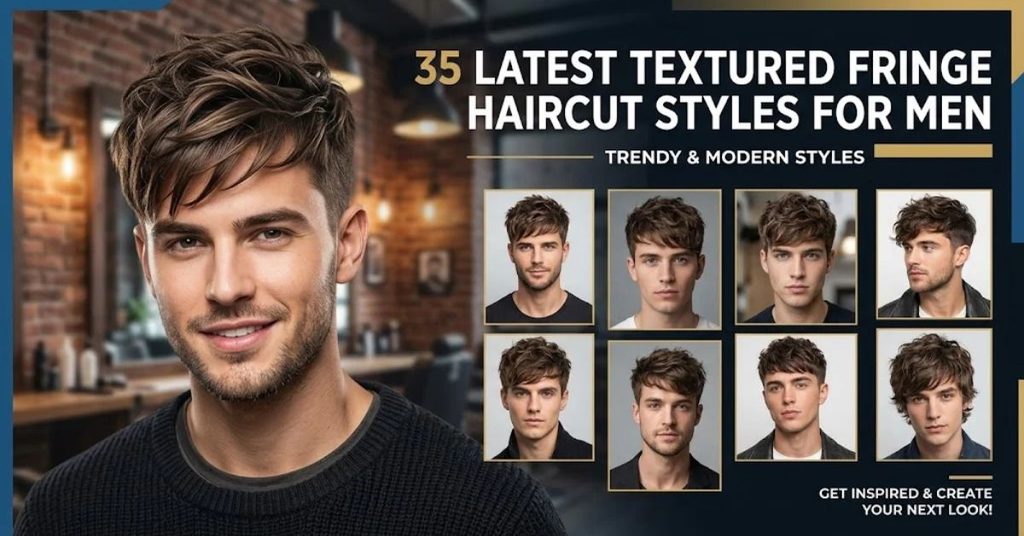
Use the descriptions below as a menu. Each one includes who it suits and a small tip for your barber.
Classic Textured Fringe
The original version. Short tapered sides, two to three inches on top, and a choppy fringe that sits just above the eyebrows. It is the safest first choice if you have never tried a fringe before. Ask for point cutting through the front.
Messy Textured Fringe
This style leans into disorder on purpose. The strands face different directions and the finish is matte. It suits wavy or slightly thick hair and takes about two minutes to style. Use clay and rough it up with your fingers.
Wavy with Skin Fade
Natural waves on top combined with a skin fade at the sides create strong contrast. It looks bold but stays neat. Ask for the fade to begin low so the waves keep their weight.
Textured Fringe Low Taper
A low taper trims only the hair around the ears and neckline. It looks natural and grows out gracefully, which makes it ideal for office settings. Expect a touch up every four weeks.
Burst Fade Textured Fringe
The burst fade curves around the ear in a semicircle and leaves length at the back. Paired with a textured fringe, it gives a modern, slightly edgy shape that works well with curls and mullet growth.
Low Fade Textured Fringe
The low fade starts just above the ear and drops to the skin near the neckline. It is cleaner than a taper but still conservative. A good choice for men who want sharp edges without drama.
Mid Fade Textured Fringe Cut
The mid fade begins around the temple level. It gives a stronger contrast between the sides and the top and makes the fringe look fuller. This one suits round and oval faces.
Textured Fringe with Undercut
An undercut removes the sides completely, leaving a sharp separation from the top. Keep the top at three to four inches so the fringe has room to move. It looks best on thick hair.
Long Textured Fringe
Here the fringe reaches the eyebrows or lower. It looks soft and creative, and it works well with a light layered cut. Trim every six to eight weeks so it does not turn into a bowl shape.
Side-Swept Textured Fringe

The fringe is brushed to one side across the forehead. It elongates round faces and creates a refined feel. Blow dry in the direction you want it to fall, then set with a light paste.
Spiky Layered Fringe
Short layers are styled upward and forward into small spikes. It reads youthful and energetic. Use a strong clay and a little hairspray, and avoid shiny gel that can look dated.
Fringe with a Beard Fade
The fade on your hair continues into the beard, so the sideburns and beard blend smoothly. This is a strong option for men who keep a full beard. Ask the barber to match both fades at the same level.
Waves with Voluminous Top
This is a wavy crop with a high, full top and a forward fringe. Sea salt spray and a diffuser give the volume. It suits medium to thick hair and men who like movement.
Cropped Fringe with a Skin Fade
A short, choppy fringe with sides faded down to the skin. It is sharp, low effort and perfect for hot climates. Keep the fringe slightly longer than the fade area so it stands out.
Mullet with a Fringe
The modern mullet is shorter and softer than the 1980s version. Combine a textured fringe, tapered sides and extra length at the back. It suits wavy and straight hair, and it grows out well.
Side-Swept Fringe with a Taper
This pairs a neat tapered finish with a swept fringe. It is a good business casual cut, because the look stays tidy through the workday. A matte cream holds it without stiffness.
Messy Fringe Cut with a Taper
A relaxed top with a clean neckline. The tapered edges keep the cut looking intentional even when the top is unstyled. It is one of the best low maintenance options in this list.
Messy Fringe with a Mid Fade
A stronger contrast version of the previous style. The mid fade adds shape, while the messy top keeps it casual. It looks great on men with straight Asian hair, because the layers add visible movement.
Clean Cut with a Fringe
Use this when you want a neat, polished appearance. The fringe is even, lightly textured and combed forward with a defined edge. It works for interviews, weddings and formal workplaces.
Layered Shaggy Fringe
Longer, feathered layers across the top and sides create a rock inspired shape. Do not over style. Let the air dry and a little cream do the work. It suits wavy and medium length hair.
Sharp Caesar with Blunt Fringe
The Caesar cut is short and even, with a straight line across the forehead. Adding light texture stops it from looking too severe. It helps hide a receding hairline.
French Cropped Style
A short top, a blunt fringe and a faded back and sides. It is quick to style and almost impossible to get wrong. Straight and thick hair holds the shape best.
Straight Fringe on Caesar with Modern Fade
This combines the clean Caesar line with a skin or low fade. The contrast is strong and modern. Keep it fresh every two to three weeks, because the straight line shows growth quickly.
Modern Caesar Haircut with Taper Fade
A gentler take on the previous cut. The taper keeps the sides soft, and a slightly textured top avoids the helmet effect. Good for men who want classic without looking dated.
Disconnected Undercut with Textured Fringe
The top is left long and the sides are cut very short with no blending. The sharp break is the point. It works best with medium length hair styled forward or slightly sideways.
Skin Fade Undercut with Textured Fringe
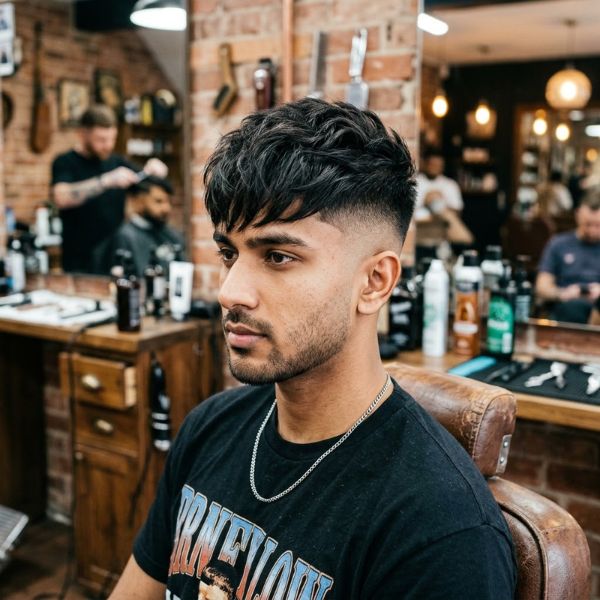
A mix of fade and undercut. The skin fade softens the transition while the top stays heavy. It is high contrast, dramatic and popular in photos.
Undercut with Curly Textured Fringe
Curls on top, shaved sides, and a fringe formed by natural curl patterns. Use a curl cream and avoid brushing dry curls. Let your barber cut curls dry to see the real shape.
Undercut with Long Textured Fringe
Five inches or more of fringe above a clean undercut. It is expressive and works well with straight hair. Expect to push the fringe aside or tuck it behind your ear sometimes.
Undercut with Short Textured Fringe
A compact version with a short top and a tiny fringe. It is easy to maintain and very neat. It suits men with thin hair, because short layers look thicker.
Textured Fringe with High Fade
The high fade climbs close to the crown, so the top looks larger. It suits rounder faces and men who want a sharp, military inspired shape. Pair with a matte finish for balance.
Curly Textured Fringe Mullet
The mullet shape paired with curls gives a natural, bold look. Ask for a taper at the sides and keep length at the nape. Moisturise the curls regularly to prevent frizz.
Curly Fringe with a Fade
A classic modern combination. The fade controls the shape, and the curls fall forward on their own. It is popular with men who have thick curly hair, because it reduces weight on the sides.
Shattered Fringe
The ends are cut at sharp, uneven angles so the fringe looks fractured. It suits straight hair, and the effect is dramatic. Ask for razor or point cutting only.
Lived-In Fringe
The lived-in fringe looks as though you just woke up with great hair. It is cut with soft layers and little product. It is currently one of the most requested styles in barbershops.
Modern Birkin Fringe
Inspired by the famous eighties and seventies silhouette, the Birkin fringe is a longer, wispy and slightly parted fringe with a softer fade at the sides. It suits fine to medium hair and fits a relaxed, creative style.
How to Get a Perfect Textured Fringe Haircut
A great result begins in the chair. Use these steps before and during your appointment.
- Bring two or three reference photos. Choose pictures of people with a similar hair type to yours.
- Use clear words. Say, for example, “a low taper, three inches on top, point cut fringe at eyebrow level.”
- Mention your hair type. Straight, wavy, curly or fine hair changes how the barber cuts.
- Talk about your daily routine. If you only have five minutes each morning, say so.
- Ask for texture, not thinning. Over thinned hair looks stringy.
- Book regular trims. Every three to five weeks for faded sides, every six to eight for longer cuts.
It takes roughly two to three months to grow a fringe long enough to style forward.
How to Style a Textured Fringe Haircut
Styling takes under five minutes once you know the order.
- Start with damp hair. Towel dry until it is no longer dripping.
- Apply a prep product. Spritz sea salt spray or a little mousse for body.
- Blow dry forward. Use medium heat and your fingers to lift the roots, then move the hair toward your forehead.
- Add your main product. Rub a pea sized amount of clay or cream in your palms.
- Work it through the top. Push the product through from back to front, then separate the ends.
- Finish lightly. A mist of hairspray holds the shape without making it crunchy.
Common mistakes to avoid:
- Using too much product, which makes the fringe look greasy.
- Combining it neatly, which destroys the texture.
- Skipping the blow dryer when hair is thick.
Hair Products to Style Textured Fringe Haircuts
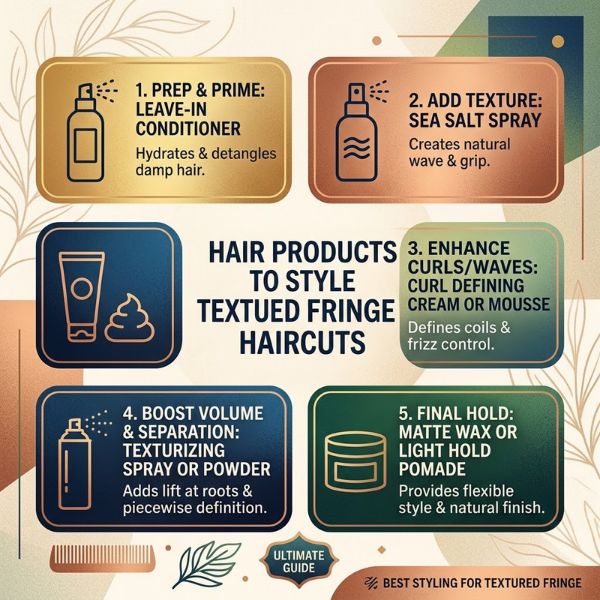
The right product depends on your hair type and the finish you want. Here are eight that earn a place in a grooming kit.
Sea Salt Spray
Sea salt spray gives grip and a beachy, matte feel. Use it on damp hair before blow drying. It is best for fine or straight hair that needs body.
Hair Clay
Clay gives firm hold with a matte finish. It is the most popular choice for choppy fringes. Warm it between your palms before applying.
Hair Thickening Spray
This spray coats the strands to make them look fuller. It is useful if your hair is thinning or very fine. Spray at the roots and blow dry.
Hair Styling Cream
Styling cream offers a light, flexible hold with a natural look. It works well for wavy, curly and lived-in fringes, because it keeps moisture in.
Volumizing Mousse
Mousse adds lift to the roots without weight. Use a golf ball sized amount on damp hair, then blow dry. It suits fine hair and waves with volume.
Texture Powder
Texture powder is a dry product that adds instant grip and volume. Sprinkle it on dry roots and massage. It is great for last minute fixes and short fringes.
Round Hair Brush
A round brush helps you shape the fringe as you blow dry. Roll the front section forward and let it cool for a few seconds to set the curve.
Pomade
Pomade provides strong hold and a shine, in water based or oil based versions. Use a very small amount on a polished or side-swept fringe. Water based options wash out more easily.
Quick Maintenance Tips
- Wash your hair two to four times a week, not daily, so natural oils stay.
- Use a conditioner, especially for curls and long fringes.
- Rinse out product at night to avoid buildup.
- Protect your hair from heat with a spray when blow drying often.
- Book a short neckline cleanup between full haircuts.
Frequently Asked Questions
What is the difference between a textured fringe and a textured crop?
A textured fringe falls forward over the forehead with longer layers, while a textured crop is shorter and often cut higher. Both use choppy layers and usually have faded sides.
How long should my hair be for a textured fringe?
About two to four inches on top works for most men. Aim for at least three inches if you want the fringe to move and style forward.
Does a textured fringe work with thin or fine hair?
Yes. Short layers make fine hair look fuller, and products such as texture powder and thickening spray add more volume.
Can curly hair have a textured fringe?
Yes. Curly hair forms a natural fringe and works well with a fade or undercut. Ask for a cut that removes bulk without losing curl shape.
What fade is best with a textured fringe?
A low taper is the most natural and office friendly, while a mid or skin fade gives stronger contrast. Choose based on your face shape and how often you can visit the barber.
How do I ask my barber for a textured fringe?
Show photos, then say how long you want the top, the fade height and that you want point cutting for texture. Mention your hair type too.
How often should I get a textured fringe trimmed?
Every three to five weeks for fades and every six to eight weeks for longer, no-fade styles. Faded sides grow out faster and show it sooner.
Is a textured fringe still in style in 2026?
Yes. Barbers continue to report it as one of the most requested cuts, thanks to its low maintenance, natural finish and flexibility.
What product is best for a textured fringe?
Matte clay is the best all rounder for most hair types. Use sea salt spray for body, or cream for curls and waves.
Is a textured fringe good for a receding hairline?
Yes. A forward fringe softens the temples and draws attention away from the hairline. A short Caesar style version is especially effective.
Conclusion
The textured fringe has earned its place because it is flexible. You can go neat with a low taper, bold with a burst fade, relaxed with a lived-in shape, or expressive with a curly mullet. Pick the style that matches your hair type, face shape and daily routine, and bring clear photos to your barber.
Once you have the cut, keep the routine simple. A little prep spray, a pea sized amount of clay and a blow dry are enough for a confident finish. Trim regularly, protect your hair and have fun experimenting.
Noah Daniel Davis is an experienced hair and beauty writer who loves sharing practical hair care tips, hairstyle ideas, and the latest trends. His goal is to make hair advice simple, useful, and easy to follow.
